
1. High-Tier City Concentration
Recent data shows that the store footprints of 31 mainstream ready-to-drink tea brands remain heavily concentrated in high-tier cities, with the top 20 cities each hosting over 1,100 locations. Shanghai leads with 3,587 stores, followed closely by Chengdu and Chongqing, which are tied for second place with 3,092 stores each. Other major cities like Guangzhou, Wuhan, Beijing, Shenzhen, Hangzhou, Changsha, Xi’an, and Suzhou all have more than 2,000 stores.
This distribution underscores the saturated nature of the market in first- and second-tier cities. For new entrants and established brands alike, achieving growth in these densely packed urban centers requires highly differentiated concepts and operational excellence, while expansion into lower-tier cities remains a key frontier for scaling.
2. Goodme(古茗)’s 2025 Financial Performance
Goodme(古茗) released its 2025 annual performance report yesterday, revealing substantial growth. The company reported revenue of CNY 12.914 billion, a year-on-year increase of 46.9%, with gross profit rising 58.6% to CNY 4.262 billion. Annual profit reached CNY 3.115 billion, marking a 108.6% surge compared to the previous year. As of the end of 2025, Goodme(古茗) operated 13,554 stores, a net increase of 3,640 locations from the end of 2024.
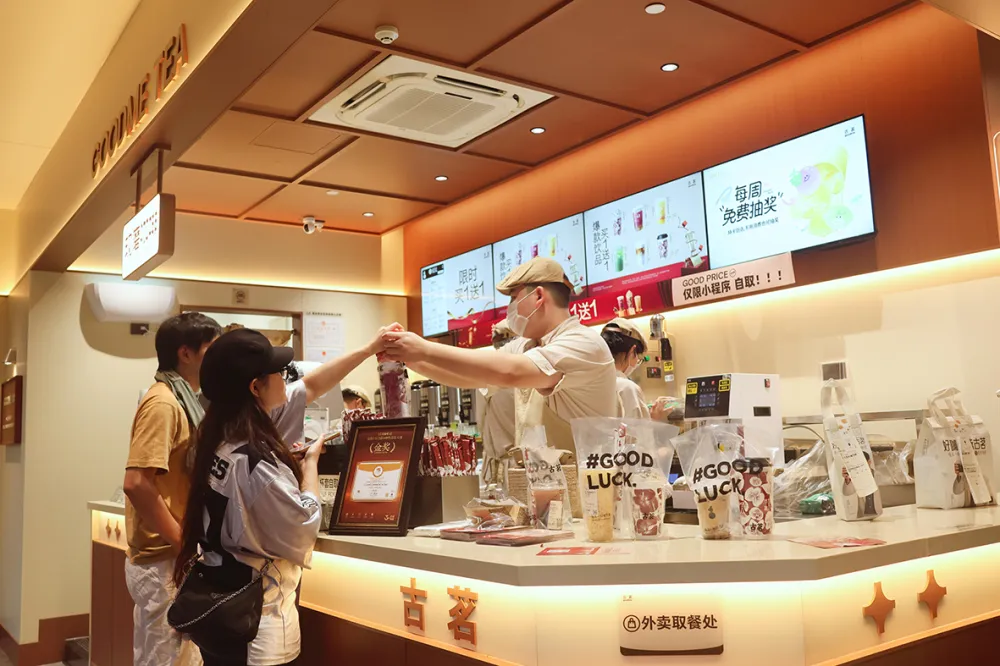
The financial results demonstrate the continued momentum of a major franchise player. The significant growth in both store count and profitability indicates strong unit economics and effective scaling strategies, reinforcing Goodme(古茗)’s position as a formidable force in the market.
3. New Product and Collaboration Launches
Today, Heytea(喜茶) launched a new beverage, the “Golden Osmanthus Sour Papaya Loquat” tea, which uses a golden osmanthus tea base combined with loquat from southern Fujian and sour papaya from western Yunnan, with lemongrass for aroma. Separately, Cotti Coffee(库迪咖啡) announced its collaboration with the game Yan Yun Shi Liu Sheng, with the co-branded套餐 set to launch on March 27, featuring the “Little Winter Melon Lemon Tea” as its signature drink.
These launches highlight two parallel tracks in product strategy. Heytea(喜茶) continues to explore complex, regional flavor profiles to drive premiumization, while Cotti Coffee(库迪咖啡) leverages popular culture and gaming partnerships to engage a younger demographic and generate buzz around its offerings.
4. Shu Xia(树夏)’s New Sugar Syrup Partnership
Shu Xia(树夏) recently entered into a partnership with COFCO, marking the official adoption of a new version of sugar syrup for its beverages. This innovative sugar is reported to have approximately 10% of the calories of traditional sucrose, 70% of its sweetness, and a glycemic index (GI) near zero.
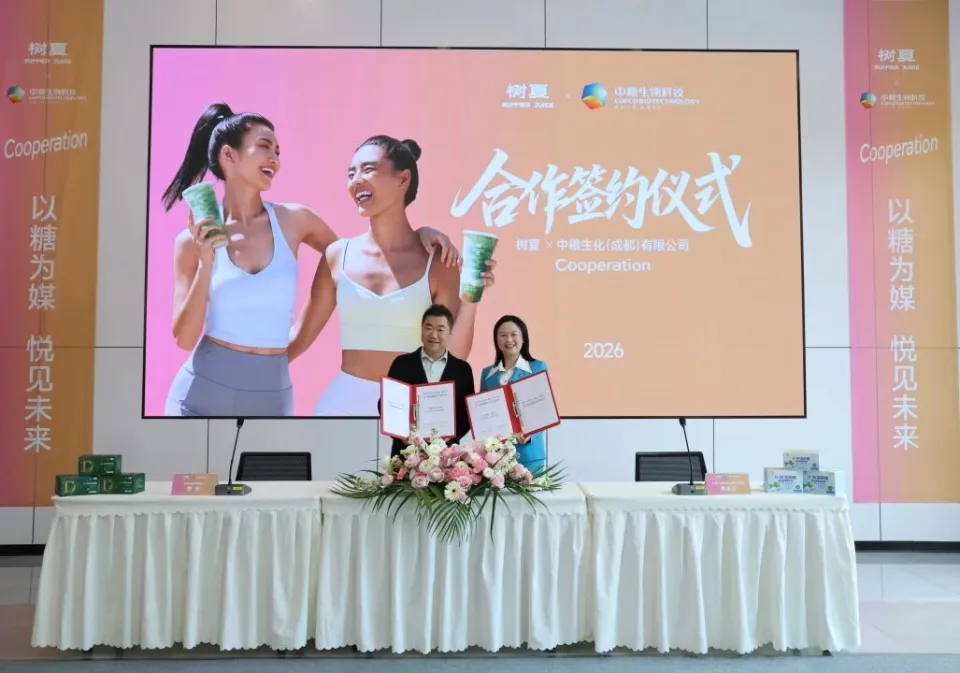
This move signals a growing industry commitment to addressing consumer health concerns through ingredient technology. By partnering with a major supplier like COFCO to implement a low-calorie, low-GI sweetener, Shu Xia(树夏) is positioning itself at the forefront of a trend towards more health-conscious formulations without compromising on taste.
5. No.3 Coconut(三号椰) Collaboration Controversy
A recent collaboration between No.3 Coconut(三号椰) and the game Mr. Love: Queen’s Choice has sparked controversy on social media. The promotional campaign included a condition where a large advertising screen would only be unlocked if the designated mall’s Xiaohongshu account gained 2,000 followers. This requirement led to criticism from fans, who viewed it as an attempt to force consumers to generate free promotional data for the brand.
This incident serves as a cautionary tale about consumer engagement strategies. It underscores the importance of designing co-branding activations that feel authentic and rewarding to dedicated fan communities, rather than transactional. The backlash highlights the fine line brands must walk when leveraging the passionate audiences of popular intellectual properties.
6. Rival “Super-Size” Promotions
Luckin Coffee(瑞幸咖啡) and Cotti Coffee(库迪咖啡) both launched “super-size” cup promotions on the same day, but with different mechanisms, sparking widespread discussion. Luckin Coffee(瑞幸咖啡) appointed Luo Yonghao as its “super-size” recommender and introduced a “free upgrade” campaign, requiring customers to participate in a lottery to win a limited number of upgrade vouchers. Concurrently, Cotti Coffee(库迪咖啡) launched an “unlimited free super-size upgrade” promotion, allowing customers to directly order the larger size without any lottery or additional steps. The “no strings attached” tagline on Cotti Coffee(库迪咖啡)’s promotional poster was widely interpreted as a direct challenge to its competitor.
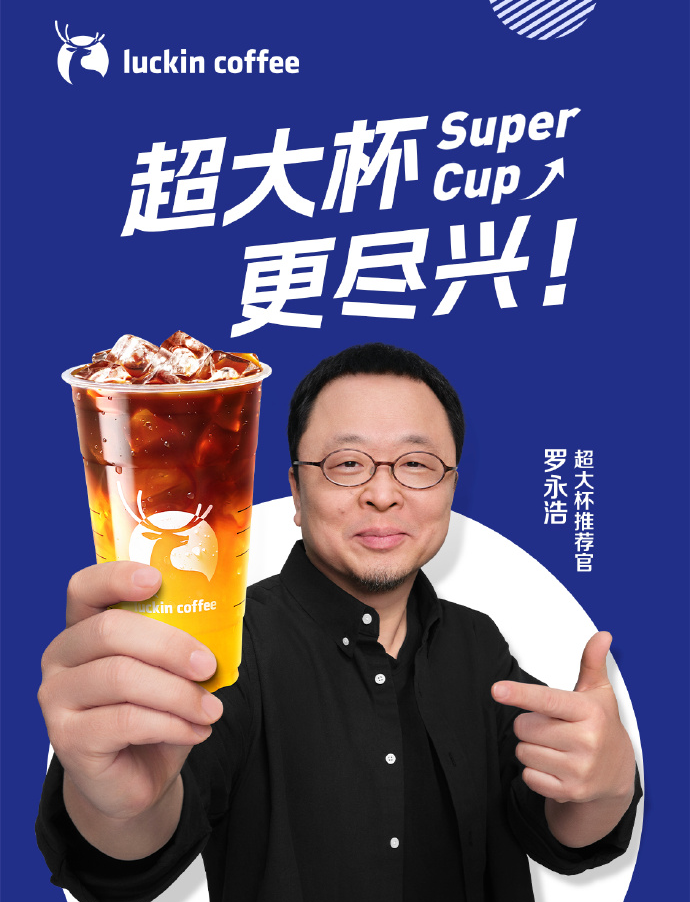
This direct comparison of promotional strategies highlights the escalating price and value war between the two coffee chains. Cotti Coffee(库迪咖啡)’s simpler, more accessible offer is positioned as a clear counter to Luckin Coffee(瑞幸咖啡)’s gamified approach, intensifying the battle for customer traffic and brand loyalty in the competitive coffee market.
7. COFCO Coca-Cola Parent Company’s 2025 Results
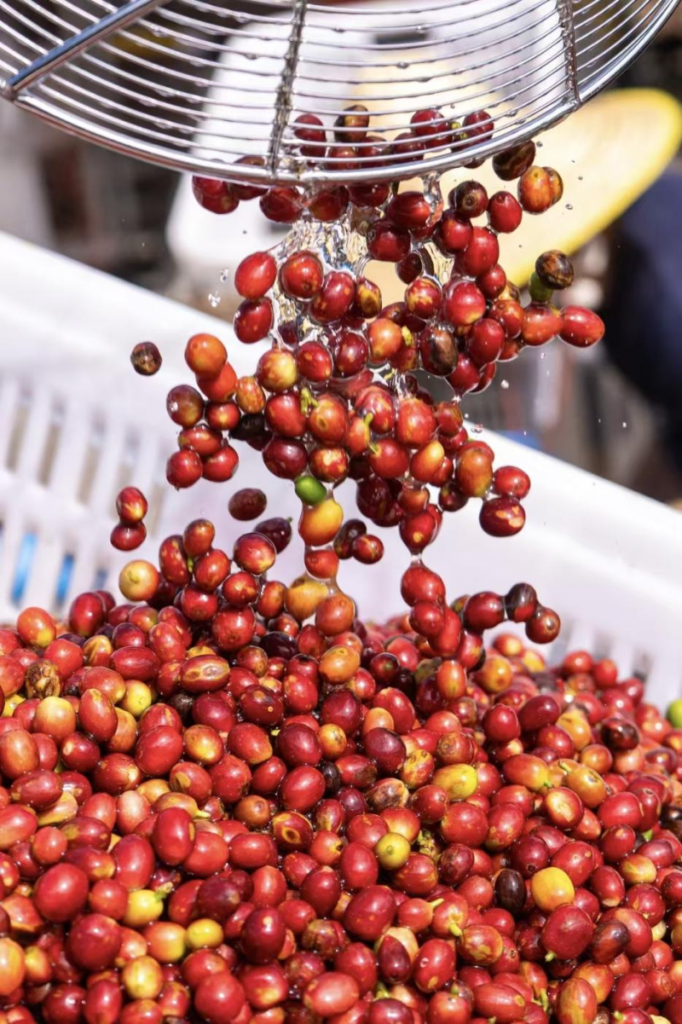
China Foods, the parent company of COFCO Coca-Cola, announced its 2025 financial results. During the period, the company achieved revenue of CNY 22.070 billion, a year-on-year increase of 2.7%. Adjusted EBIT grew by 6.1% to CNY 1.979 billion, while adjusted EBITDA rose by 5.5% to CNY 2.872 billion.
The stable, albeit modest, growth of a major beverage industry supplier provides a crucial backdrop. As a key partner for many food service businesses, the performance of giants like China Foods reflects the overall health and steady expansion of the broader beverage ecosystem, which supports the continued growth of the HORECA sector.
