
The first month of 2026 has delivered a series of strategic moves across the tea and coffee landscape, from accelerated international expansion to significant menu innovation and shifting domestic demographics. These developments reveal important patterns in how major brands are adapting to market saturation at home while pursuing growth abroad.
1. International Expansion
January saw 14 freshly brewed tea brands open 49 new overseas locations, signaling a sustained commitment to global markets. TianLaLa(甜啦啦) led this charge with 23 new international stores, followed by TEAPULSE(悸动), which opened five locations exclusively in New York City, and Molly Tea(茉莉奶白), which added four new overseas outlets.
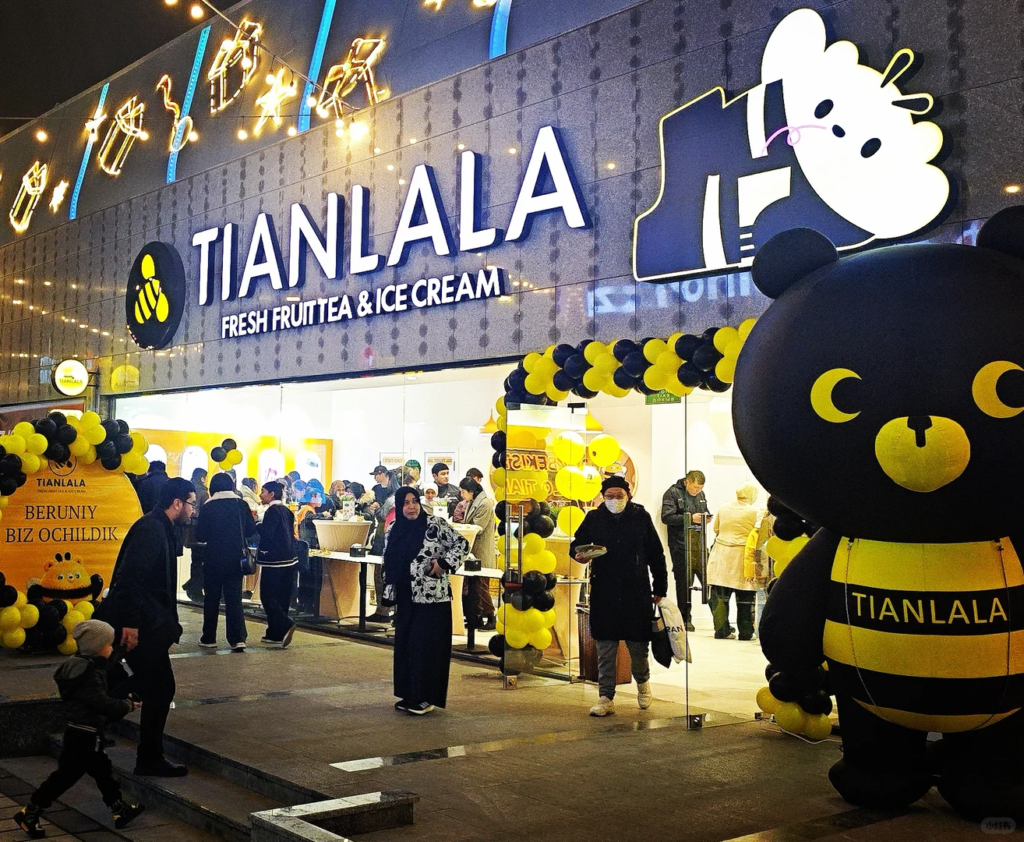
The data confirms that international growth remains a top priority for major Chinese tea brands, with the US market emerging as a specific target for mid-tier players seeking to establish a footprint.
2. Domestic Growth Trends
The geographic center of gravity for domestic store expansion continued its downward shift in January. Tier-4 cities and below added 871 new outlets, accounting for 27.87% of all new store growth, while tier-3 cities contributed 779 new locations, representing 24.93% of the total.
This sustained investment in lower-tier markets indicates that brands view these regions as the primary engine for future domestic growth, moving beyond saturated first- and second-tier urban centers.
3. Product Innovation Pace
Menu innovation remained aggressive among leading brands in January. Among the top 15 tea chains by store count, ChaPanda(茶百道) led with nine new product launches, followed closely by NO YEYE NO TEA(爷爷不泡茶) with eight new offerings. In the coffee segment, Tim Hortons(天好咖啡) and Peet’s Coffee(皮爷咖啡) tied for the most active innovation, each introducing seven new items.
The data underscores that rapid menu rotation continues to be a core competitive strategy for maintaining consumer interest in both tea and coffee categories.
4. Luckin Coffee x POP MART Collaboration
Luckin Coffee(瑞幸咖啡) has launched a new collaboration with POP MART’s Zsiga character, introducing a “Snowy Cheese Peach” beverage. The new offering features a jasmine tea base combined with peach pulp, peach sauce, and a creamy cheese foam to create a layered flavor profile.
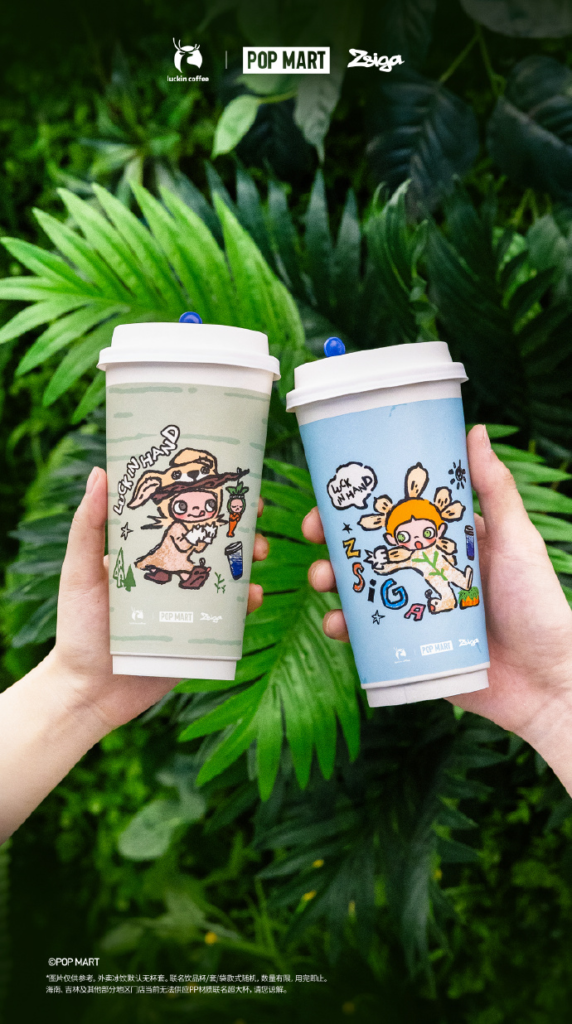
This partnership continues Luckin’s established strategy of leveraging popular intellectual property to drive traffic and social media engagement around new product drops.
5. Shanghai Coffee Innovation
A new coffee creation called “Tiger Orange” has generated significant buzz in Shanghai’s coffee scene. Developed by local shop HonkyTonk Coffee and officially named “Tiger Bomb,” the beverage is priced at 48 CNY and has helped propel the store to the top of the city’s coffee rankings on Dianping, where it remains the most-recommended menu item.
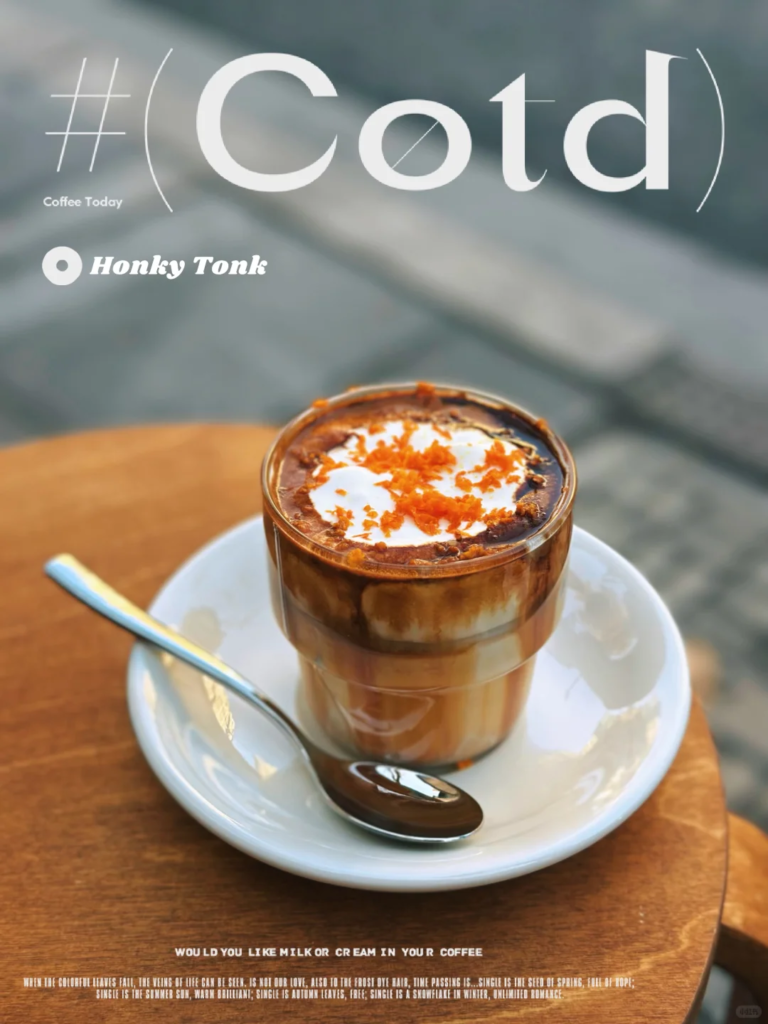
The product’s success demonstrates that independent cafes can still capture market attention through distinctive, visually appealing creations that generate word-of-mouth and social media traction.
6. Thailand Sugar Reduction Mandate
Thailand has implemented a significant industry-wide sugar reduction initiative, with nine major beverage companies—including Cafe Amazon and All Cafe—partnering with the Ministry of Public Health. The new standard reduces sugar content in standard-sweetness drinks by 50%. For a typical 500ml serving, popular options like Thai milk tea and iced tea now contain approximately 3.3 teaspoons of sugar, down from the previous 6.6 teaspoons.
This regulatory shift in a major Southeast Asian market may signal broader regional moves toward standardized sugar limits, with implications for international brands operating across multiple regulatory environments.