
The February 10 news cycle reveals a bifurcating tea and coffee market, where top chains simultaneously pursue health-focused store formats, aggressive international entry, and sophisticated channel diversification. These moves signal maturing competitive playbooks around product architecture, labour investment, and retail distribution.
01. Naìsnow(奈雪的茶) Debuts Low-GI Store Format
The Move: Naìsnow(奈雪的茶) opened its trial “Fiber·Studio” location in Shenzhen Coastal City today. The store exclusively launched a “Low-GI & Multi-Fiber” product series centered on sugar-controlled formulations, designed as an immersive tea space integrating health, art, and social functions.
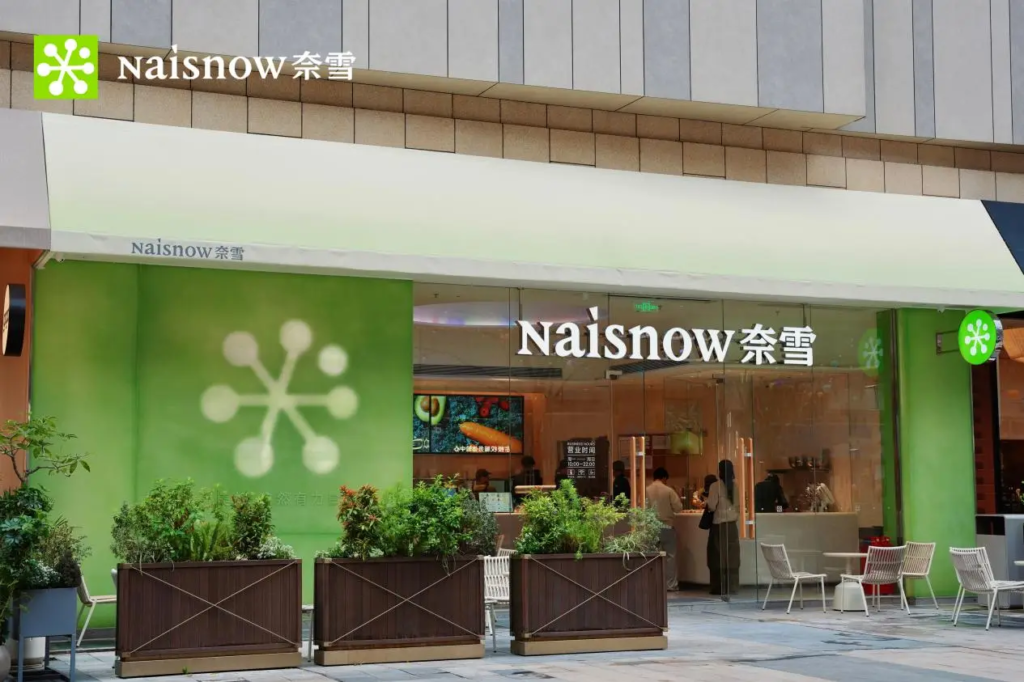
Market Signal: The dedicated store format—not merely a limited-time menu—indicates that Naìsnow is treating controlled-sugar offerings as a permanent category infrastructure rather than a seasonal promotion. This represents a capital-intensive bet on health-positioned retail real estate.
02. Cotti Coffee(库迪咖啡) Opens UK Flagship with Lean Model
The Move: Cotti Coffee(库迪咖啡) commenced operations at its first UK outlet on Liverpool’s Middlesex Street. Public images show a street-side location with minimal temporary self-pickup seating, reflecting an asset-light operational strategy. The menu spans coffee, tea, smoothies, milkshakes, and light meals, with pricing maintained at 1.9–4.7 GBP (approx. 17.94–44.37 CNY).
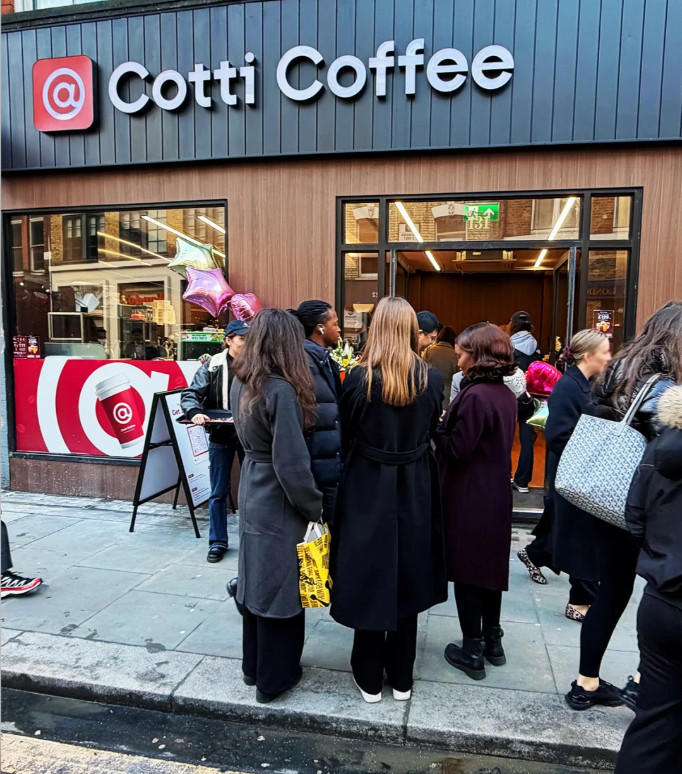
Market Signal: Cotti is exporting its domestic lean-store economics without significant adaptation for Western seating expectations. The low price point relative to UK specialty coffee averages suggests the brand is testing whether volume-driven, takeaway-focused models translate across markets.
03. Year-End Rewards Reveal Brand–Labour Relationship Models
The Move: Tea chains distributed annual bonuses ahead of Spring Festival. Mixue(蜜雪冰城), Goodme(古茗), and YH.Tang(益禾堂) emphasized cash supplemented by high-utility goods. Heytea(喜茶), Naìsnow(奈雪的茶), and ChaYanYueSe(茶颜悦色) embedded bonuses into brand-coded items such as custom nameplates and limited peripherals. Regional independents and franchise outlets favored local specialties or owner-crafted gifts.
Market Signal: Bonus structures are signalling corporate positioning: volume-driven chains prioritize fungible value, while premium brands treat compensation as an extension of identity cultivation. Regional shops leverage personalized gestures where systemic HR infrastructure is thinner.
04. Starbucks(星巴克) Flagship Reopens with Experiential Refresh
The Move: Starbucks(星巴克) Disney Town location reopened following a decade‑in‑operation renovation. The store adopts a “coffee estate” theme integrating animal prints, floral motifs, and art installations to produce festive atmosphere.
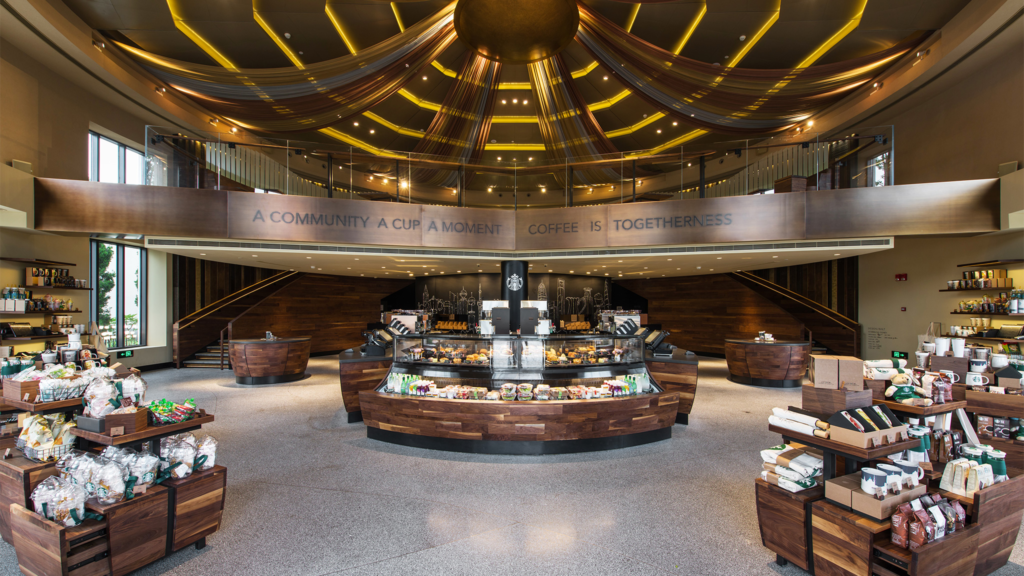
Market Signal: Rather than functional upgrades, the renovation prioritizes destination retail and visual spectacle. In a mature market where coverage is saturated, store refreshes function as marketing assets that regenerate foot traffic without new site acquisition.
05. Heytea(喜茶) Expands Bottled Presence Across Mass Retail
The Move: Heytea(喜茶) debuted a new bottled product, Apple Light Lily, at Pangdonglai. Existing bottled SKUs continue strong performance across Sam’s Club, Tmall, and JD.com. The brand’s bottled Salty Cheese Tibetan Tea holds Sam’s Club top ranking, while its Milky Tea and Light Fruit Tea Lunar New Year gift boxes ranked on JD.com’s hot beverage charts.
Market Signal: Heytea is successfully translating tea-shop SKUs into packaged goods credentials, validated by third‑party retail rankings. This diversifies revenue beyond store operations and places the brand in direct competition with established FMCG beverage players on their home channels.
06. Qingdao Beverage Group Acquires Yunnan Spring Water Asset
The Move: Yunnan Dashan Drinking Water completed an equity restructuring. Former shareholder Qingdao Beer Youjia Healthy Beverage exited, with Qingdao Beverage Group assuming its full 35 million CNY capital contribution.

Market Signal: A provincial beverage conglomerate consolidates regional water assets. For tea and coffee operators dependent on consistent water profiles for extraction, upstream supplier ownership changes warrant monitoring for potential pricing or formulation adjustments.