
The February 11 news cycle presents a divided landscape: leading domestic chains accelerate store format innovation and viral consumer engagement, while international brands publicly reassess their China exposure and upstream dairy suppliers report deepening losses. Together, these moves signal both aggressive home-market investment and mounting structural pressures.
Heytea(喜茶) Prepares Largest-Format Lab Store
The Move: Heytea(喜茶) is set to open its first Lab2.0 store in Shanghai’s Fengsheng Li area by February 28. According to leaked design plans, the outlet will feature the broadest product assortment in the brand’s current portfolio, suggesting an experimental large-format flagship.

Market Signal: The Lab2.0 format represents a strategic pivot toward destination retail that consolidates multiple beverage categories under one roof, moving beyond standard tea-shop economics to test higher-ticket and cross-category offerings.
Coca‑Cola Signals Strategic Review of Costa China
The Move: Coca‑Cola CFO John Murphy confirmed the company is evaluating Costa Coffee’s China operations, stating that no final decision has been made regarding a potential exit. Coca‑Cola retains 100% control of the brand.
Market Signal: This is the first public indication of portfolio rationalization for Costa in China since its 2019 acquisition. The review implies that sustained profitability in China’s crowded coffee market remains elusive for the British brand.
ChaPanda(茶百道) Expands into Roasted Tea Segment
The Move: ChaPanda(茶百道) will launch a roasted tea series on February 12, featuring three SKUs: Peanut Roasted Nougat, Taro Ball Roasted Coconut, and Charcoal Roasted Milk Tea. Formulations blend genmaicha roasted tea base with ingredients such as peanut candy, taro paste, coconut milk, and cheese foam.
Market Signal: Roasted tea—a niche profile relative to mainstream fruit tea—is being tested as a seasonal traffic driver. The move reflects menu diversification strategies that rotate flavor architectures rather than relying on staple bestsellers alone.
Molly Tea(茉莉奶白) Drives Engagement with Customizable Cup Stickers
The Move: Molly Tea(茉莉奶白) introduced “Happy Sticker” cup labels featuring hand‑drawn horse‑themed puns (e.g., “Crazy Horse,” “Jam Horse”). Customers generate personalized cups via the brand’s mini‑program, spurring social‑media sharing and repeat purchases.
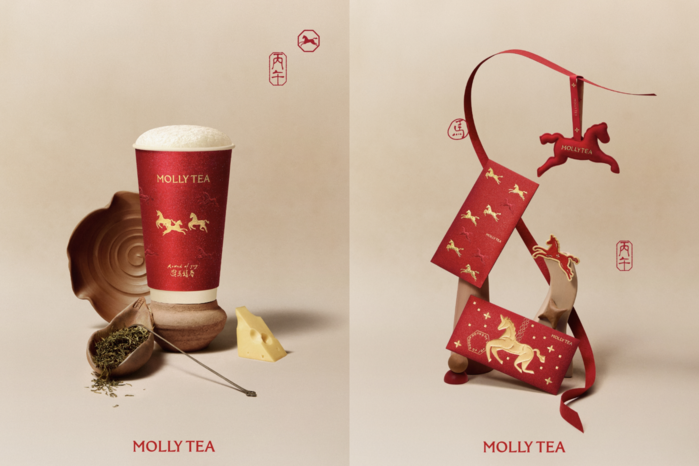
Market Signal: Low‑cost digital‑to‑physical customization tools can generate significant organic reach without paid media. The campaign demonstrates how minimal incremental investment in packaging personalization creates viral user‑generated content.
Nespresso Activates Immersive Pop‑Up in Shenzhen
The Move: Nespresso opened a “Spring Promenade” pop‑up in Shenzhen, designed as a lantern‑festival installation. The space integrates light art, interactive elements, and a six‑item menu of Lunar New Year–themed coffee specials.
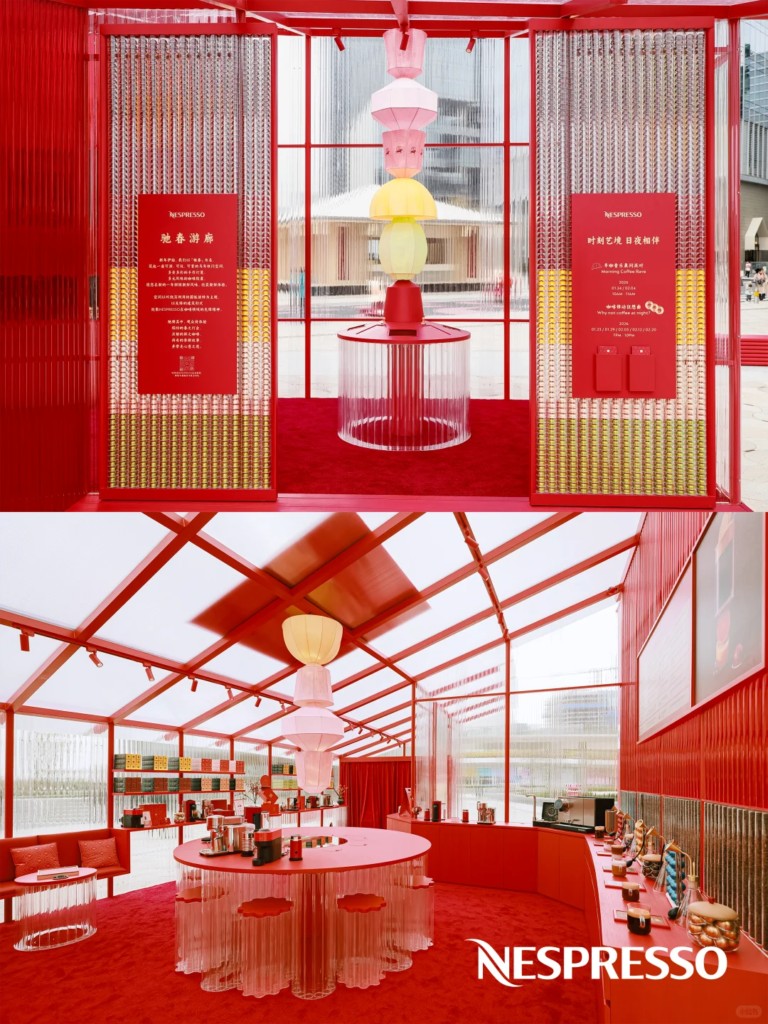
Market Signal: Premium coffee brands continue to deploy temporary experiential venues in tier‑1 cities to maintain cultural relevance and drive trial, avoiding the capital commitment of permanent expansion while testing localized flavor concepts.
Naìsnow(奈雪的茶) Bundles Valentine’s Peripherals with Beverages
The Move: Naìsnow(奈雪的茶) launched a nationwide Valentine’s Day campaign featuring a limited‑edition “Hugging Rose Plush Pony” keychain. Consumers purchasing the designated set receive both the drink and the peripheral.
Market Signal: Branded soft toys remain a reliable loyalty mechanic for gifting occasions. Bundling collectible merchandise with beverages lifts average ticket value and encourages multi‑unit purchases without altering core pricing.
Synlait Milk Reports Deepening Interim Losses
The Move: Synlait Milk, the New Zealand dairy processor part‑owned by Bright Dairy, projected an EBITDA loss of NZ$28–33 million and an after‑tax net loss of A$33–38 million for the period ending January 31, 2026.

Market Signal: Persistent financial losses at a major supplier of dairy ingredients to Asian markets may pressure pricing and supply continuity for Chinese tea and coffee chains reliant on imported milk solids, cream, and milk powders.
