
Today’s industry movements reveal a clear strategic pivot among leading brands. Across coffee and tea sectors, companies are decisively moving beyond aggressive discounting and pure scale expansion. The focus is now on premiumization, profitability, international growth, and creating deeper consumer connections through flagship experiences and regional consolidation.
Luckin Coffee (瑞幸咖啡): The 30,000th Store Milestone
The Move: Luckin Coffee (瑞幸咖啡) has opened its 30,000th global store in Shenzhen, marking a new record for a Chinese coffee brand. Unlike its typical compact pickup stores, this 420-square-meter, two-story venue is positioned as a high-end “Origin Flagship Store”. The store is designed to showcase the brand’s global supply chain, featuring an exclusive menu of hand-drip and specialty coffees, art installations illustrating coffee origins, and a dedicated space for coffee salons and events.

Market Signal: This flagship represents a strategic shift from purely driving scale to elevating brand value and consumer experience. It signals Luckin Coffee (瑞幸咖啡)’s ambition to move upmarket, testing consumer willingness to pay for premium products (priced around 15.9 CNY per cup) and immersive environments while maintaining a more accessible price point than independent boutique cafes.

Lavazza (拉瓦萨): A Turn to Profitability
The Move: In its parent company Yum China’s 2025 earnings report, the coffee chain Lavazza (拉瓦萨) reported a net addition of 34 stores last year, bringing its total in China to 146. Notably, the brand’s same-store sales turned positive in 2025. Furthermore, Yum China’s CFO highlighted that the capital expenditure for Lavazza (拉瓦萨)’s latest store model is approximately 500,000 CNY, about half the cost of the old model.
Market Signal: The positive same-store sales growth, coupled with a significantly more cost-efficient store model, indicates that this international brand is moving towards a more sustainable and profitable growth phase in the competitive Chinese market. The focus is on optimizing unit economics rather than expansion at any cost.
Kawokka (卡旺卡): Regional Expansion into Jiangsu
The Move: The Anhui-based new tea drink brand Kawokka (卡旺卡) has officially registered its Jiangsu regional headquarters in Nanjing’s Jianye District, with its first store in the province opening on February 8. The headquarters, fully funded by its parent management company, has a registered capital of 50 million CNY and plans to open over 20 new offline stores in the region during 2026.
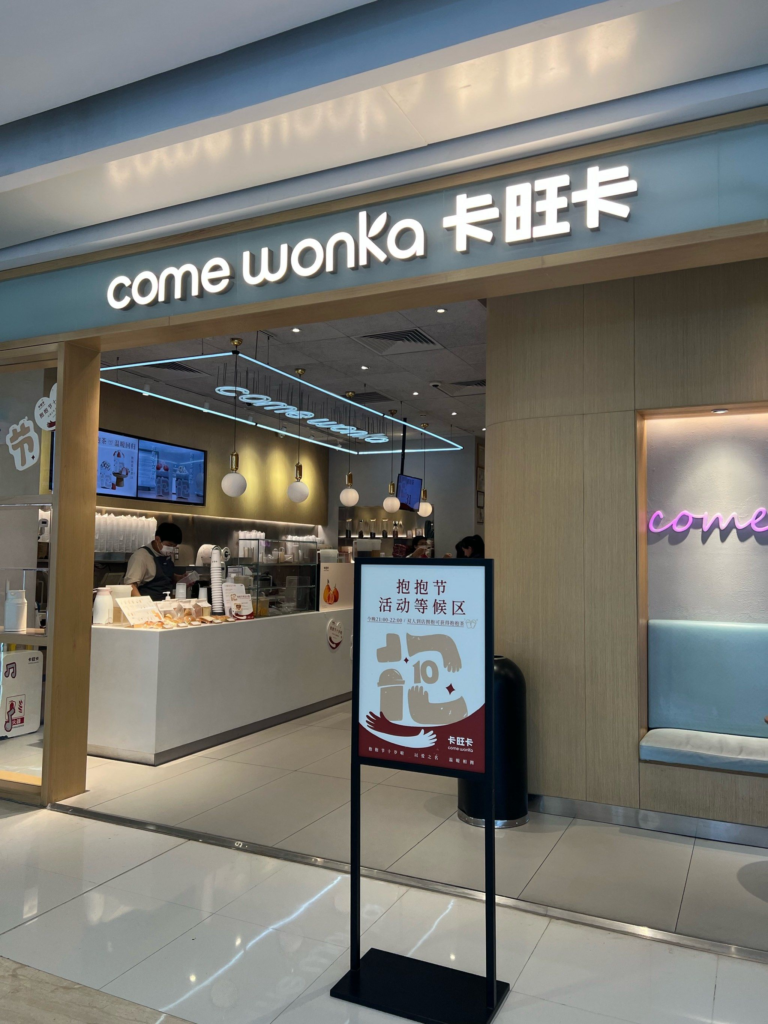
Market Signal: This move demonstrates how strong regional brands are progressing with structured, headquarters-driven expansion into new provinces. It reflects a strategic approach to growth beyond their home territory, leveraging Nanjing’s status as a commercial hub to tap into the broader Jiangsu consumer market.
Naisnow (奈雪的茶): Strong Overseas Demand
The Move: Naisnow (奈雪的茶) opened its first U.S. West Coast and California store in Cupertino, Silicon Valley. The opening generated significant consumer enthusiasm, with peak wait times exceeding three hours and three-day opening sales surpassing 94,000 USD (approximately 650,000 CNY). This store is the brand’s fourth in the U.S. market.
Market Signal: The performance underscores the robust overseas demand for premium Chinese tea drink brands in high-consumption markets. It validates the global appeal of Naixue’s Tea (奈雪的茶)’s “healthy tea drink” positioning and its ability to attract a discerning, international customer base.
Cotti Coffee (库迪咖啡): Strategic Shift from Price War
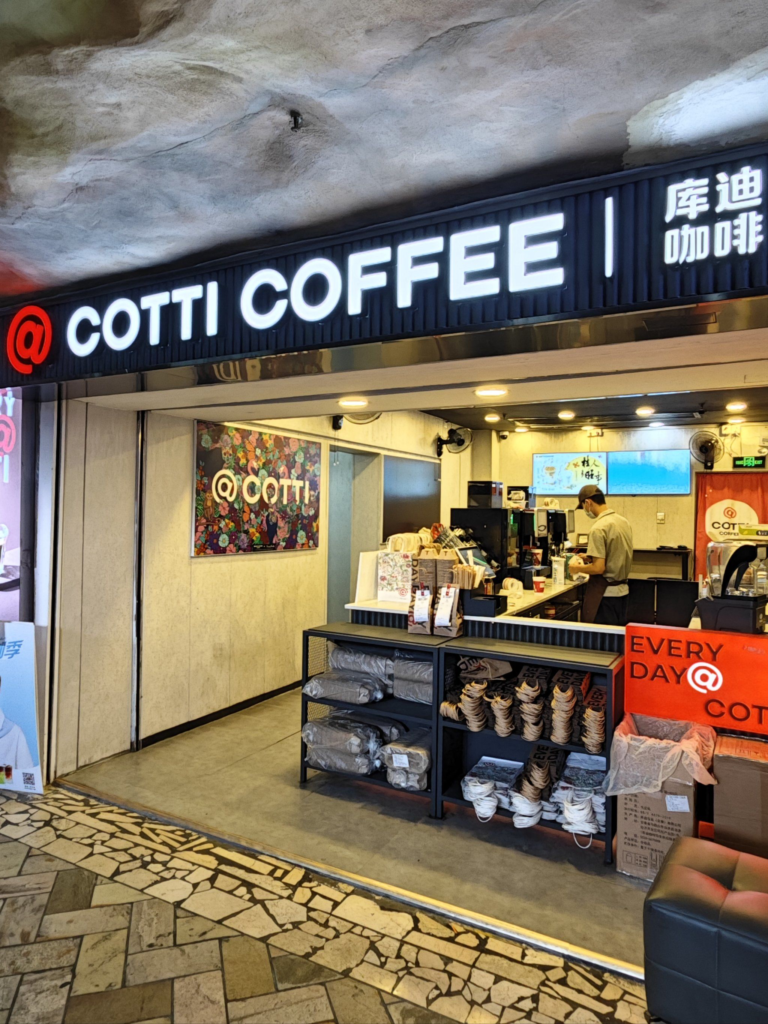
The Move: Cotti Coffee (库迪咖啡), a key initiator of the industry-wide price war, has made a significant strategic adjustment. As of February 2026, it canceled its “all-items 9.9 CNY” promotion. The offer is now limited to a “special price zone” featuring 3-7 products, while the prices of other core items have increased to a range of 11.9 to 16.9 CNY.
Market Signal: This shift is widely seen as a signal that the intense, industry-wide low-price competition is coming to an end. Brands are now prioritizing unit profitability and sustainable business models over market share acquisition through deep, unsustainable discounts.
CHAGEE (霸王茶姬): Deepening Presence in Southeast Asia
The Move: CHAGEE (霸王茶姬) continues its international expansion in Southeast Asia, recently opening its 26th store in Thailand at the ICONSIAM shopping center in Bangkok. The brand has introduced a location-exclusive beverage, Ceylon Black Milk Tea, and exclusive merchandise like mini vacuum cups and starry red thermoses at the new store. The brand is now present in six countries across Southeast Asia.
Market Signal: The strategy of launching market-exclusive products and merchandise highlights a focus on localization and creating unique retail experiences for overseas consumers. It points to a mature phase of internationalization where brands cultivate deeper connections in each local market rather than simply replicating a standard store model.
